As businesses continue to evolve in an increasingly digital world, customer support has become a critical element in driving customer satisfaction and loyalty. One of the biggest shifts in this area has been the rise of AI-powered chatbots, transforming the way brands engage with their customers. But despite the rapid advancements in AI, the question remains: Can chatbots fully replace human agents, or will a hybrid approach of both be the future?
In this blog post, we’ll explore the growing role of AI chatbots and AI chatbot development in customer support, their strengths and limitations, and how they compare to human agents. We’ll dive into the benefits and challenges of each, while also considering how businesses can strike the right balance between automation and the human touch. By the end of this post, you’ll have a clear understanding of where AI chatbots fit into the customer service landscape and how to make informed decisions on incorporating them into your support strategies.
AI Chatbots
AI chatbots are intelligent virtual assistants powered by Artificial Intelligence (AI), Natural Language Processing (NLP), and Machine Learning (ML). Their primary purpose is to simulate human-like conversations, interpret customer intent, and deliver quick, accurate responses, often without human intervention.
With advancements in conversational AI, chatbots are no longer limited to answering FAQs. They can now analyze customer data, personalize recommendations, and integrate seamlessly across channels like websites, apps, and messaging platforms. For many businesses, they represent the next step in delivering scalable, cost-efficient, and always-available customer service.
Key Features of AI Chatbots
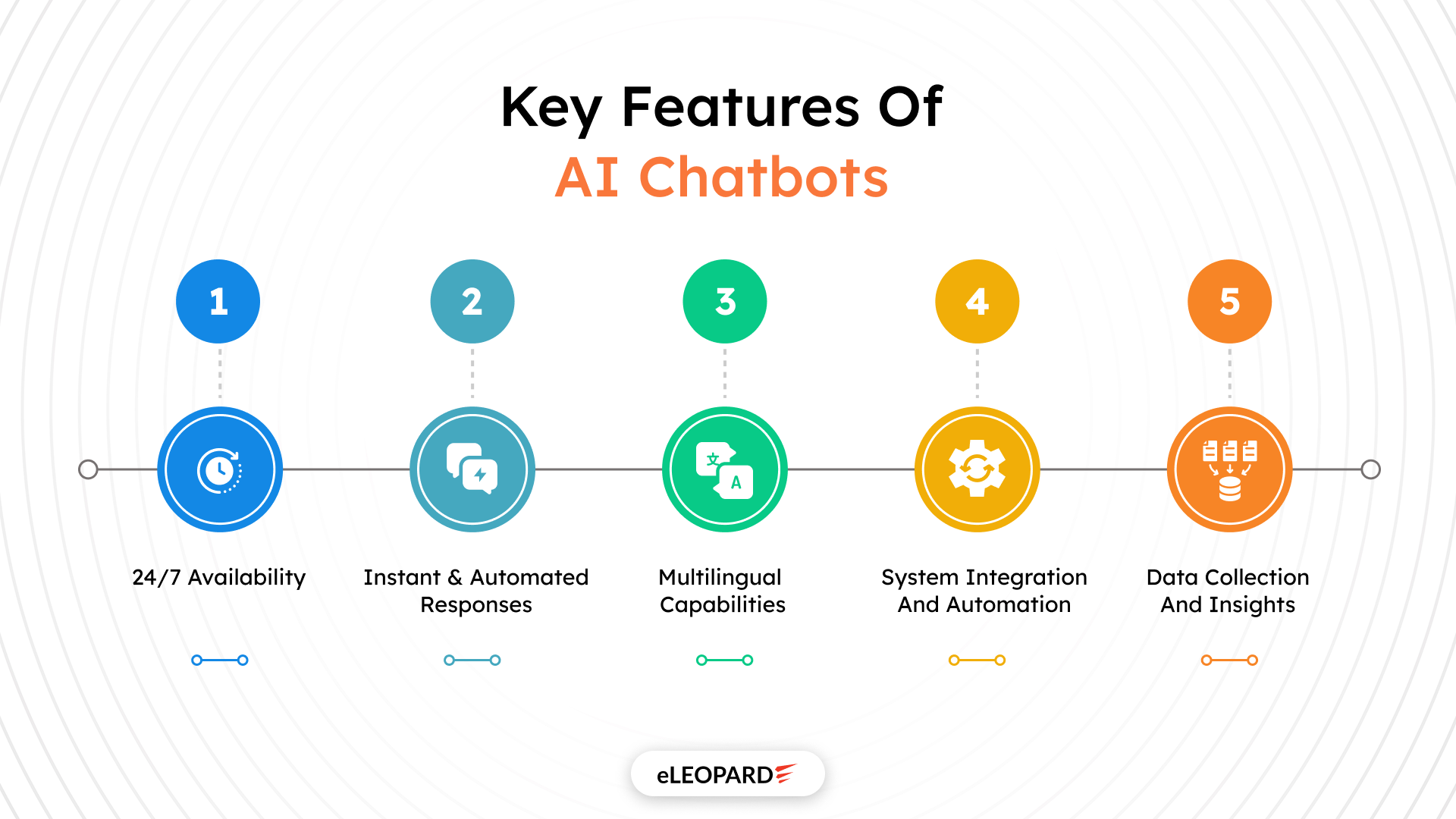
1. 24/7 Availability
2. Instant and Automated Responses
3. Multilingual Capabilities
4. System Integration and Automation
5. Data Collection and Insights
Benefits of AI Chatbots
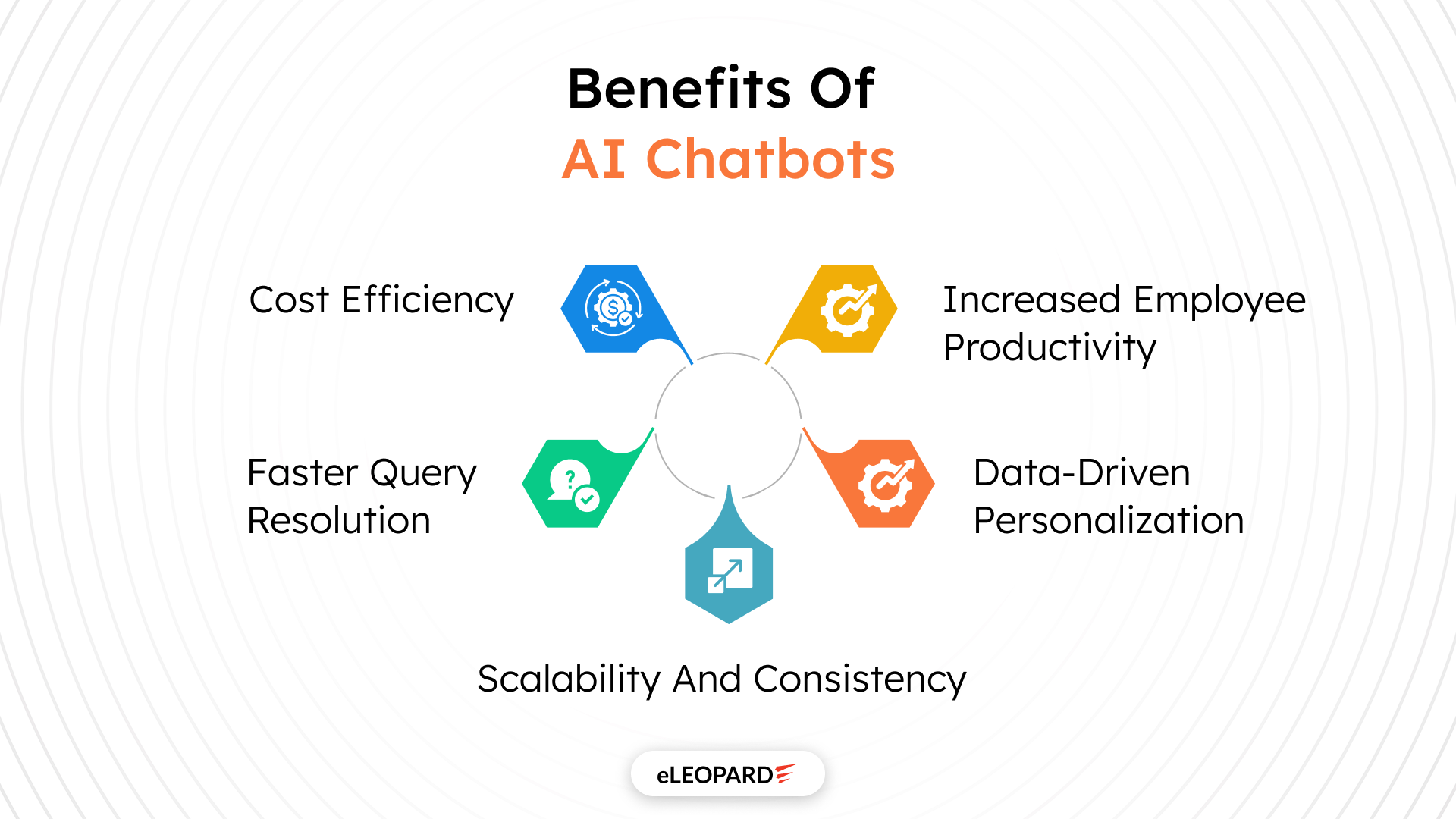
1. Cost Efficiency
2. Faster Query Resolution
3. Scalability and Consistency
4. Data-Driven Personalization
5. Increased Employee Productivity
Human Agents
Human agents continue to be the foundation of exceptional customer support. They bring emotional intelligence, empathy, adaptability, and critical thinking, traits that technology still struggles to replicate. Human interactions are particularly valuable when dealing with complex, sensitive, or high-stakes situations where trust and understanding are key.
Despite the rise of automation, human agents remain irreplaceable for businesses that prioritize relationship-building and customer loyalty over mere speed and efficiency.
Key Features of Human Agents
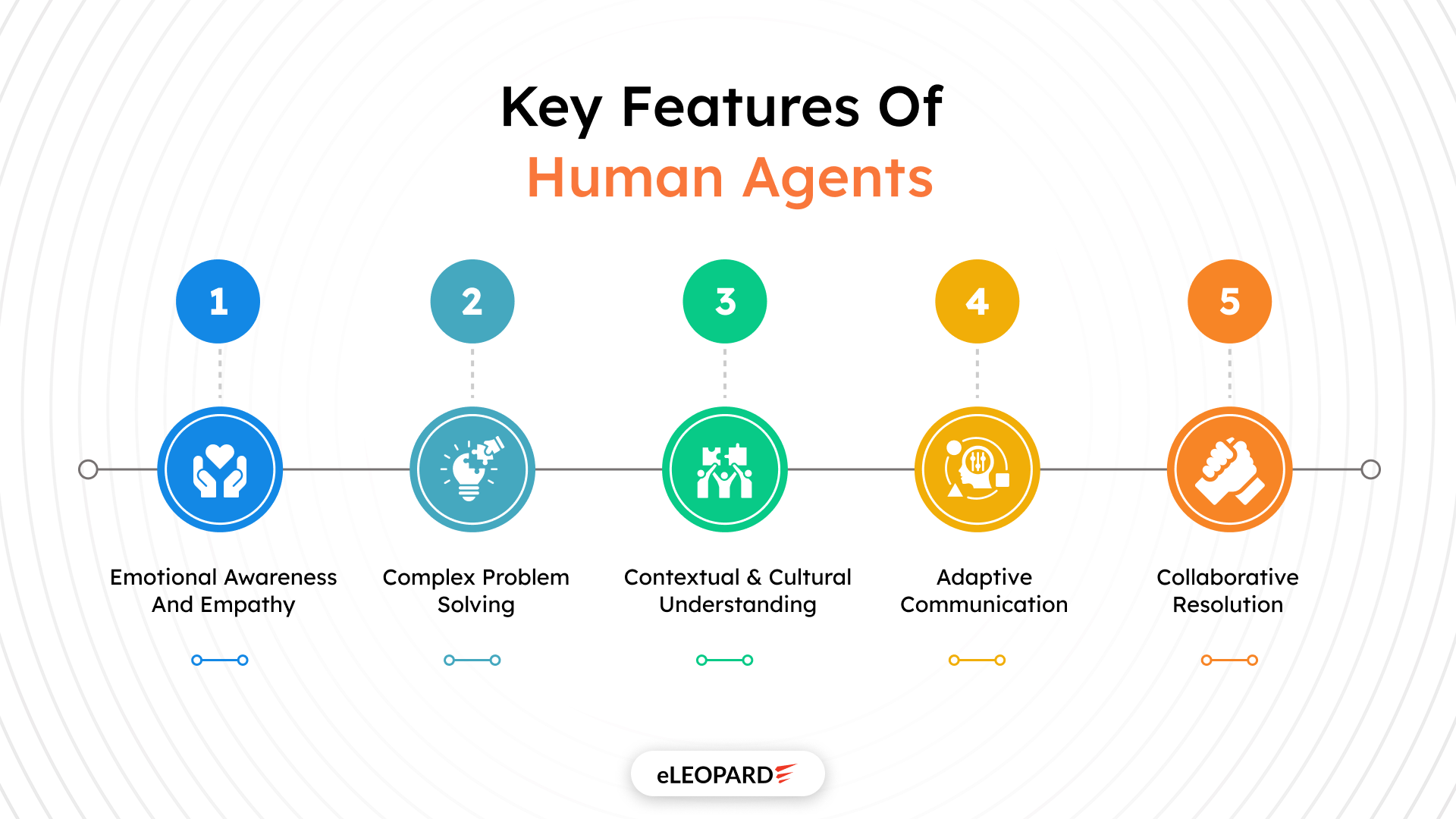
1. Emotional Awareness and Empathy
2. Complex Problem Solving
3. Contextual and Cultural Understanding
4. Adaptive Communication
5. Collaborative Resolution
Benefits of Human Agents
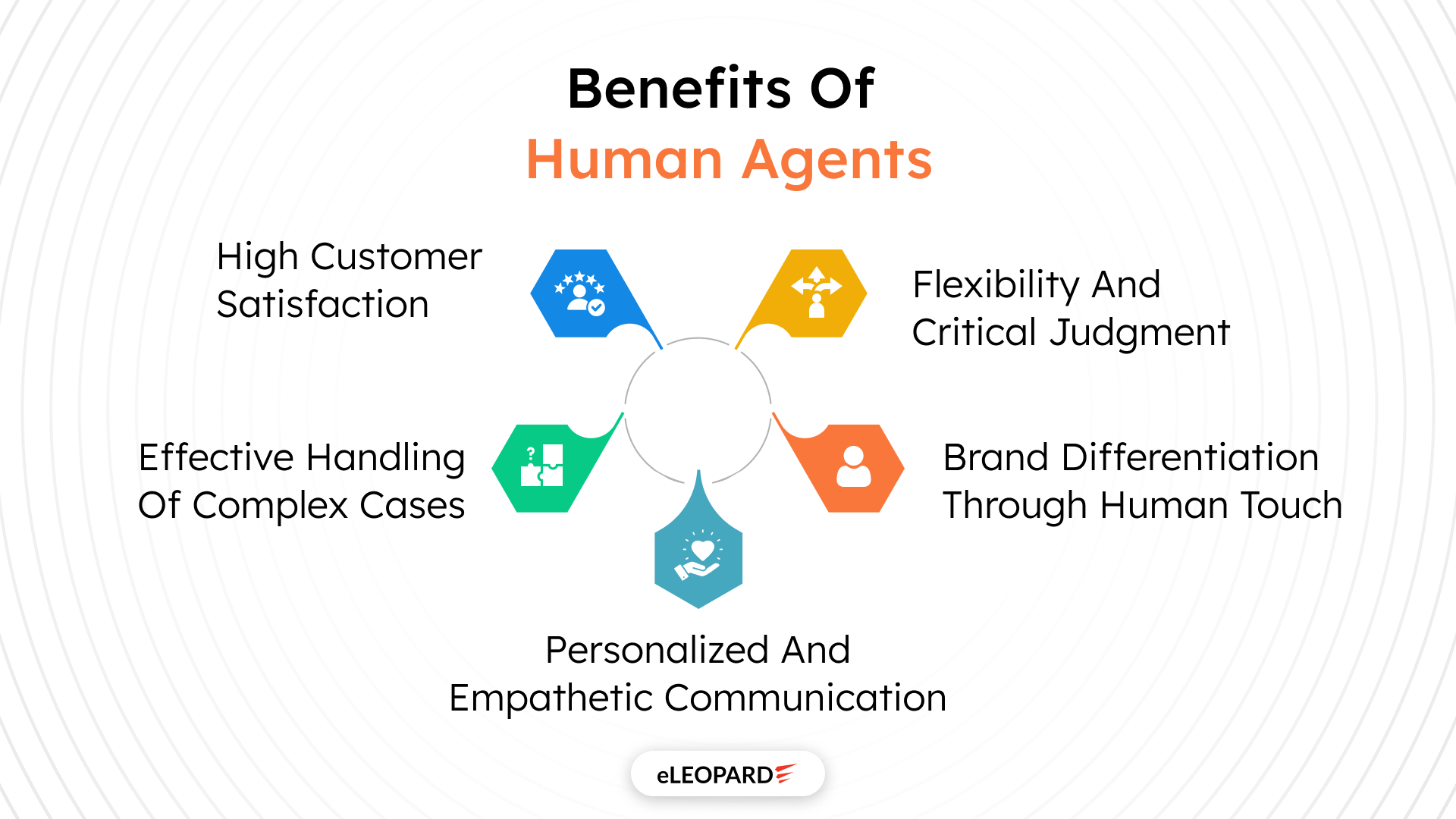
1. High Customer Satisfaction
2. Effective Handling of Complex Cases
3. Personalized and Empathetic Communication
4. Brand Differentiation Through Human Touch
5. Flexibility and Critical Judgment
AI Chatbots vs. Human Agents: A Side-by-Side Comparison
Key Differences Explained
1. Availability and Speed
2. Complex Problem-Solving and Emotional Intelligence
3. Cost and Scalability
4. Personalization and Customer Experience
5. Consistency and Error Rate
6. Learning and Adaptability
Which is More Popular: AI Chatbots vs. Human Agents?
In the past few years, AI chatbots have been gaining significant traction due to advancements in artificial intelligence, machine learning, and natural language processing. According to Gartner, by 2025, 75% of customer service interactions will be powered by AI, which includes chatbots and virtual assistants. The shift towards automation is evident in industries like e-commerce, telecom, banking, and tech support, where businesses are leveraging AI to handle high volumes of customer inquiries efficiently. AI chatbots are particularly popular for handling routine tasks such as FAQs, password resets, order tracking, and basic product queries.
On the other hand, human agents continue to be irreplaceable, particularly in industries where complex, personalized, and emotional support is required. They are still preferred in scenarios where understanding customer sentiment, navigating intricate problems, and offering tailored advice is necessary. While automation is on the rise, human agents remain popular for more high-touch industries like healthcare, finance, luxury brands, and situations involving escalations.
When to Use AI Chatbots vs. Human Agents?
AI Chatbots are ideal in scenarios where:
- The inquiries are simple and repetitive, such as password resets, booking appointments, or answering frequently asked questions.
- The business operates in industries with high volumes of customer interactions, like e-commerce or telecommunications, where scalability is essential.
- There is a need for 24/7 availability, and customers are looking for instant responses without needing human interaction.
- Businesses are aiming to reduce operational costs by automating routine tasks.
Human Agents should be used when
- The customer requires empathy, understanding, or emotional support, for example, in healthcare, insurance claims, or when dealing with upset customers.
- The issue at hand is complex and requires problem-solving, creativity, or a deep understanding of the product or service.
- The customer interaction involves escalations or high-stakes situations, such as legal inquiries or sensitive complaints.
- Personalization is key, and a human touch is necessary to maintain brand loyalty and satisfaction, especially for high-value customers.
Performance Comparison: AI Chatbots vs. Human Agents
1. Speed
2. Accuracy
3. Scalability
4. Empathy and Problem-Solving
What Are the Costs of AI Chatbots vs. Human Agents?
AI Chatbots
The costs associated with AI chatbots typically include development, implementation, and maintenance:
- Development and Integration: A basic chatbot can cost anywhere from $5,000 to $50,000, depending on its complexity, while advanced chatbots using NLP or machine learning may cost upwards of $ 100,000 or more.
- Operational Costs: After initial development, the ongoing costs are relatively low. Maintenance and updates typically cost between $1,000 $5,000 per year.
- Subscription Models: Some chatbot platforms offer pricing based on usage, which might range from $50 to $1,000+ per month, depending on the volume of interactions, the features used, and the platform.
Human Agents
The costs of employing human agents include:
- Salaries: The average salary for a customer service representative in the USA is around $40,000 to $60,000 per year, depending on the role and location.
- Training Costs: Training new agents costs companies anywhere from $1,000 to $5,000 per agent, depending on the industry and complexity of the role.
- Overhead: Additional costs for human agents include benefits, office space, technology (computers, software), and management, which can significantly increase the cost-per-interaction.
In summary, AI chatbots offer a lower long-term cost, particularly for routine tasks, while human agents come with higher upfront and ongoing operational expenses.
What to Choose Between AI Chatbots and Human Agents?
1. For Routine and High-Volume Inquiries
2. For Complex Issues or Emotional Support
3. For Cost Efficiency and Scalability
4. For Personalization and Relationship Building
The Future of AI Chatbots vs. Human Agents
The future of customer support will likely see an increasingly integrated approach. While AI chatbots will continue to evolve with advances in machine learning, NLP, and even emotion recognition, human agents will remain essential for providing empathy, handling complex situations, and offering personal touches. AI will complement human agents, not replace them entirely.
Looking ahead, businesses are likely to adopt hybrid models, where AI chatbots handle the routine, scalable interactions, while human agents step in for the more intricate, emotional, or value-driven aspects of customer service. This collaborative approach will provide the best of both worlds, optimizing both efficiency and customer satisfaction.
In conclusion, businesses should assess their specific needs, volume of interactions, and the type of customer support required when deciding on the mix of AI and human agents. The future of customer support lies in finding the optimal balance between automation and human interaction.
Transform Your Customer Engagement with eLEOPARD’s AI Chatbot Solutions
At eLEOPARD, we don’t just build chatbots; we create intelligent, adaptive solutions that evolve with your business. Our AI-powered chatbots are designed to streamline communication, enhance customer experiences, and drive operational efficiency. Whether you’re looking to improve support, sales, or lead generation, we’ve got the perfect AI solution for you.
Start your AI journey today. Contact eLEOPARD to explore custom chatbot solutions that will revolutionize your business operations and keep you ahead of the competition.
