Elementor AI: The "End-to-End" Platform
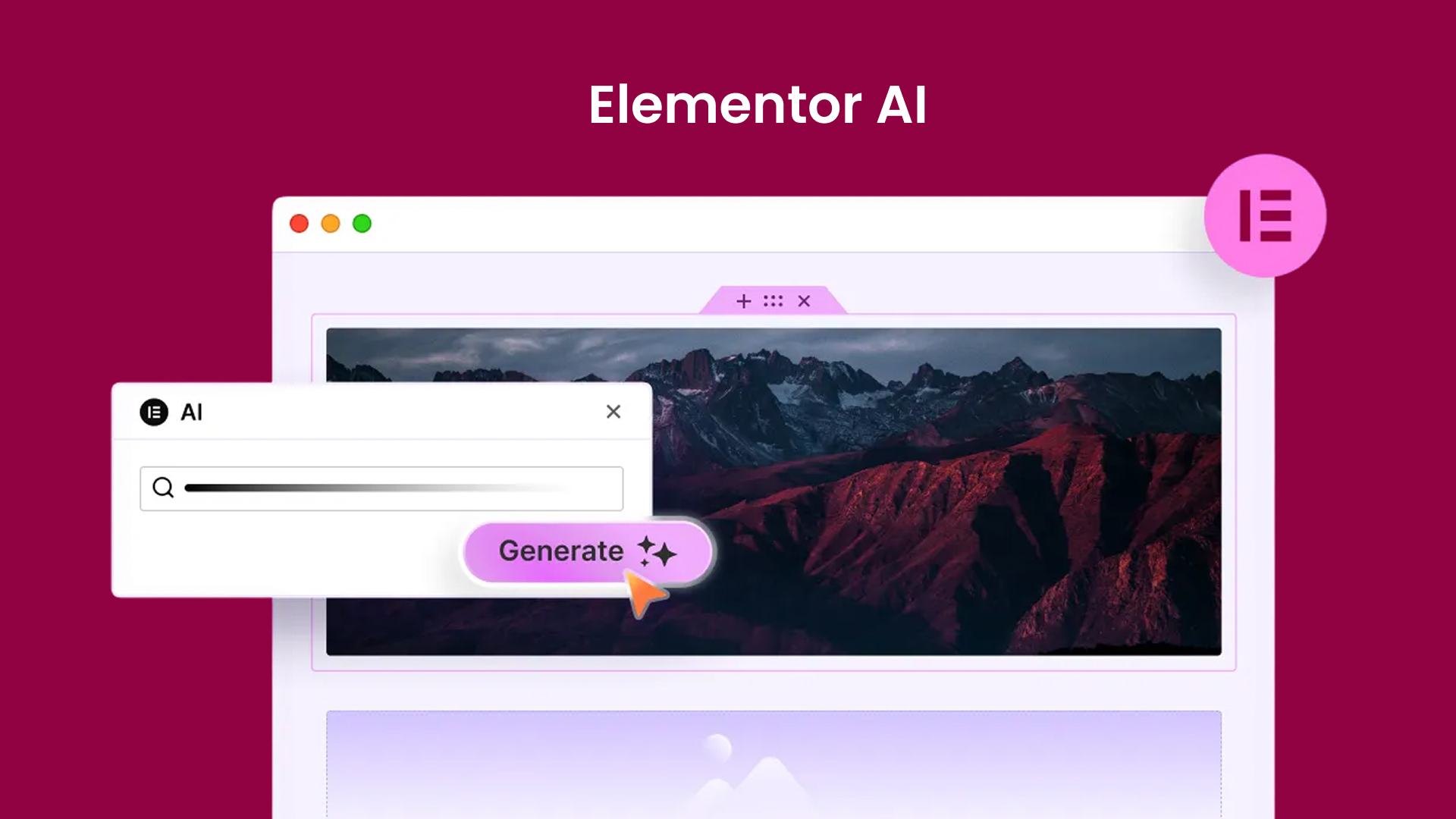
Elementor has transitioned into a comprehensive AI ecosystem designed for both rapid creation and professional management.
- AI Site Planner : This tool eliminates “blank page syndrome” by converting a simple business description into a full project brief, a visual sitemap, and stylized wireframes within minutes. It can even integrate with Google Meet to capture client requirements in real-time and turn them into actionable site plans.
- Angie (Agentic AI) : A site-wide assistant capable of performing multi-step actions. Unlike standard AI, which only generates content, Angie can execute commands such as “translate all service pages to Spanish” or “fix all performance issues across the site.”
- AI Context : This feature allows the AI to learn from your existing business data, ensuring all generated text and layouts adhere to your specific brand tone and professional requirements.
Elementor AI
Pros:
- Extensive Flexibility : Integrates deeply with the WordPress ecosystem, allowing limitless customization beyond the AI’s initial suggestions.
- Strategic Planning : The AI Site Planner is unique, generating sitemaps and wireframes before actual design begins, which is highly valuable for agency workflows.
- Managed Ecosystem : Offers an all-in-one solution with high-performance hosting and built-in accessibility tools like Ally.
Cons:
- Ongoing Costs : AI features are sold as a separate, credit-based subscription (ranging from ~$48 to $192/year), which can become expensive for heavy users.
- Performance Overhead : Extensive features can lead to slower page loads if not properly optimized with caching.
Divi AI: The Design & Imaging Specialist
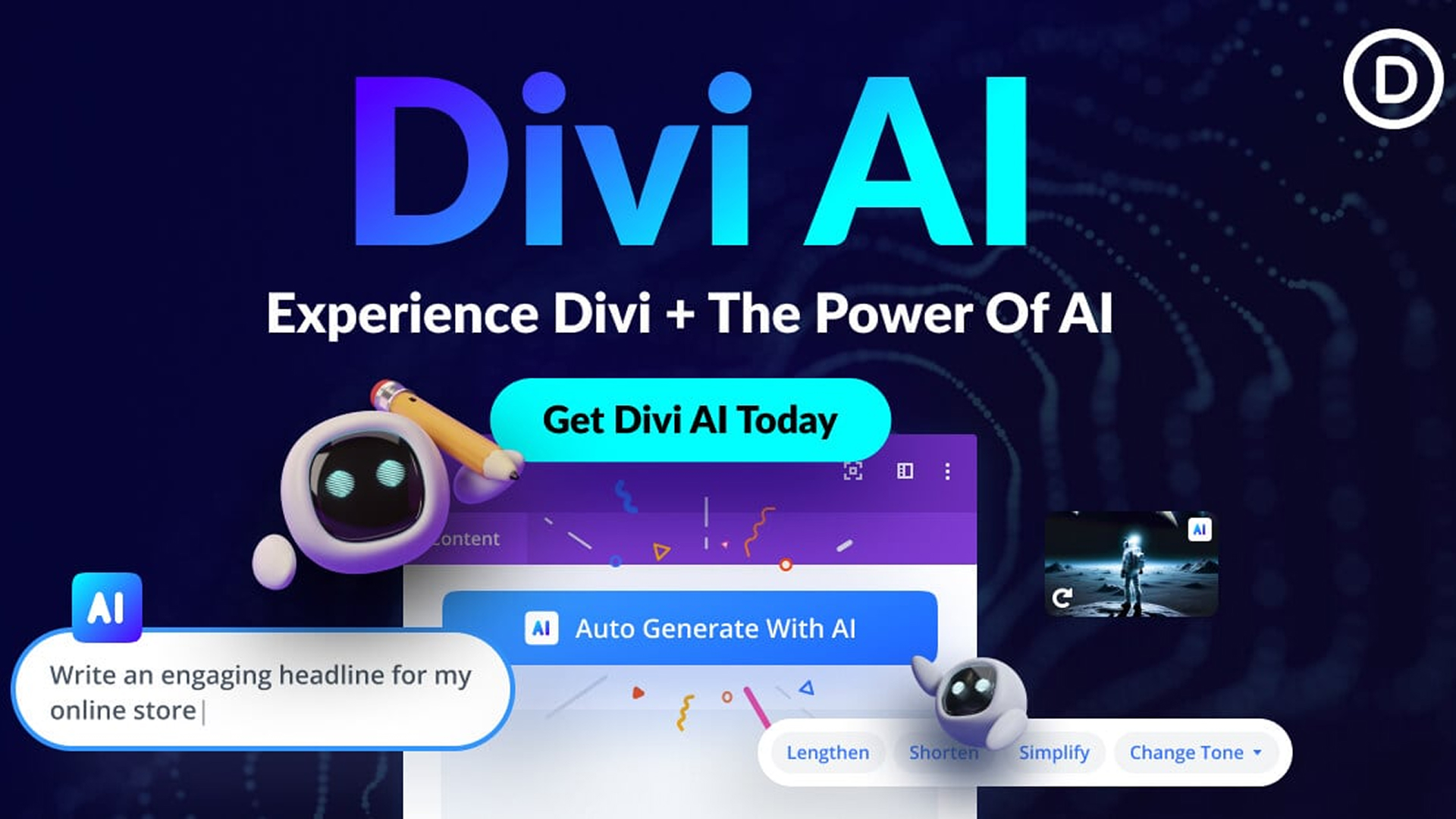
Divi focuses on high-fidelity visual results and deep integration within its Visual Builder.
- Context-Aware Generation : Divi AI analyzes your existing page content to generate highly relevant headlines and copy that match the style of a professional writer.
- AI Image Studio : Beyond basic generation, Divi includes advanced image editing like outpainting (expanding an image’s background), upscaling low-resolution photos by up to 4x, and reimagining existing visuals into different artistic styles (e.g., 3D render, digital painting).
- Code AI : Trained specifically on the Divi module codebase, it can write custom CSS and JavaScript to create unique animations or design tweaks without needing external snippets.
Divi AI
Pros:
- Superior Image Tools : Offers advanced image editing like “inpainting” (modifying specific parts of a photo) and “outpainting” (expanding backgrounds) directly in the builder.
- Unlimited Usage : Unlike credit-based systems, Divi AI typically offers unlimited usage for a fixed fee, making it the best value for power users.
- Lifetime Value : Divi remains the only major builder with a lifetime payment option, which is highly cost-effective long-term.
Cons:
- Steeper Learning Curve : The floating-widget interface can be confusing for new users compared to standard sidebars.
- Shortcode Lock-In : It is difficult to switch away from Divi later because its content is heavily tied to proprietary shortcodes.
SeedProd AI: Rapid Deployment & Conversions
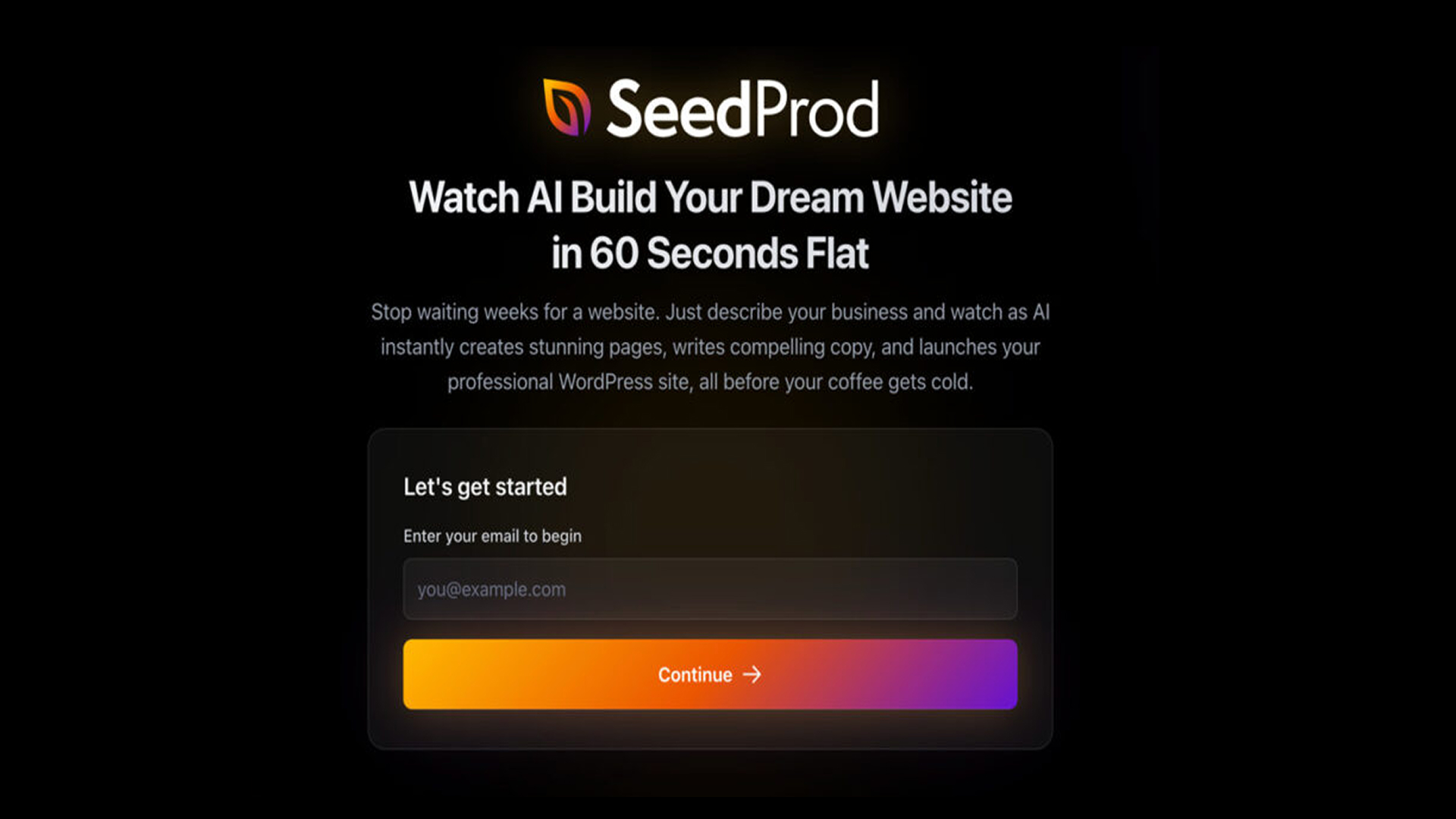
SeedProd is optimized for building high-converting landing pages and full sites in under 60 seconds.
- Instant AI Generator : By entering a company name and short description, users can generate a complete website package, including home, about, services, and contact pages.
- Placeholder Perfection : For designers, it can fill projects with industry-specific placeholder text (rather than generic lorem ipsum) to help clients visualize the final product’s flow immediately.
- Conversion Focus : The AI Writing Assistant is specifically tuned to generate persuasive sales copy and optimized headlines for marketing funnels.
SeedProd AI
Pros:
- Fastest Load Times : Consistently outperforms others in speed tests due to its lightweight code and “Isolation Mode”.
- Conversion Optimization : AI is tuned specifically for generating sales copy and high-converting layouts.
- Simplicity : Offers a guided questionnaire approach that is virtually “foolproof” for absolute beginners.
Cons:
- Limited Scope : Not ideal for building complex, multi-page websites or advanced backend systems.
- Basic AI Editing : Lacks the advanced image and code editing features found in Divi or Elementor.
10Web AI: Automation & Cloning
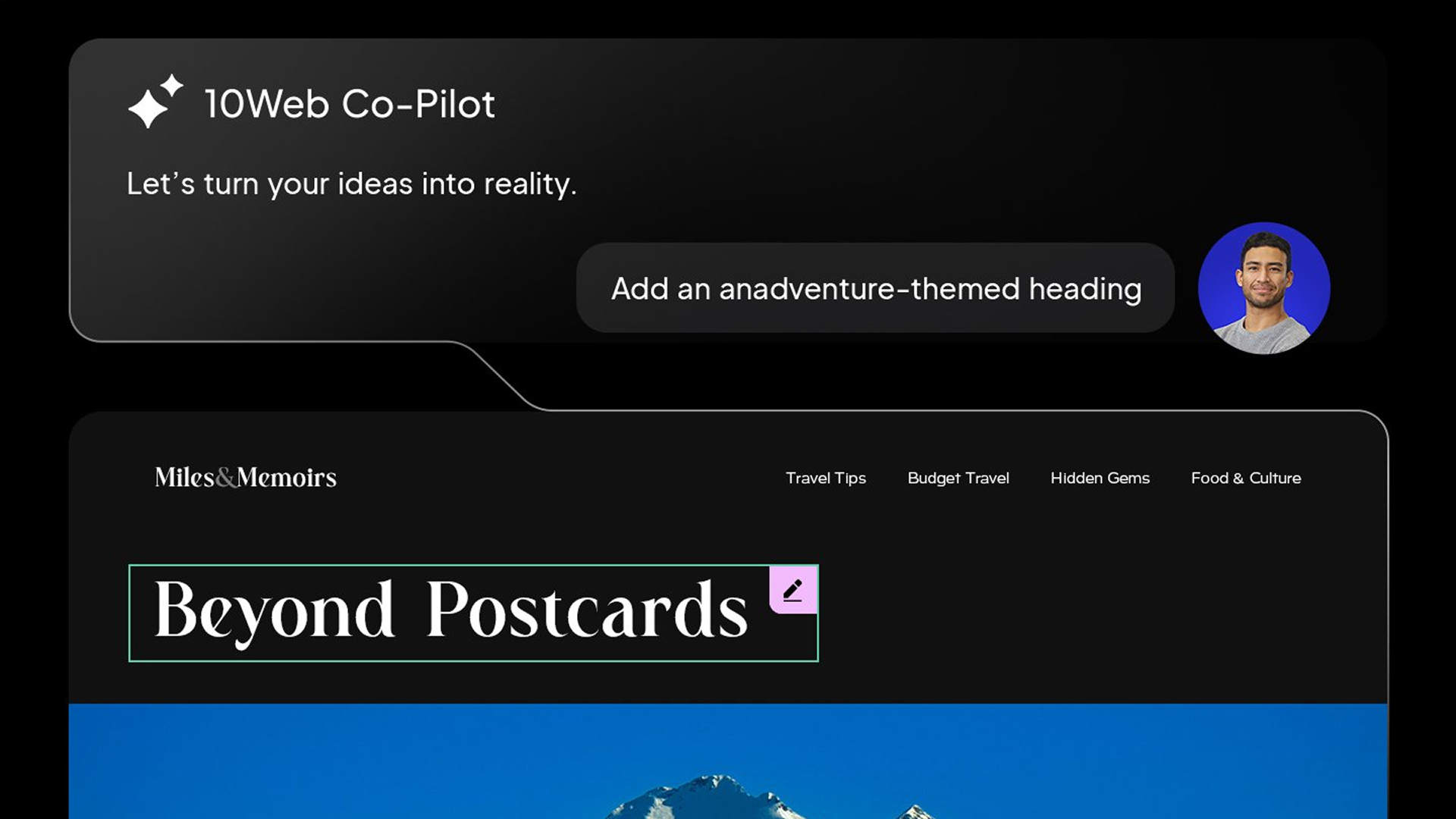
10Web leverages AI for complex technical migrations and performance optimization.
- AI Recreation (URL Cloning) : This feature allows users to input any website URL; the AI then analyzes and recreates that design as a fully editable WordPress site using Elementor-based blocks.
- Automatic 90+ PageSpeed : The platform uses AI to automatically optimize both the frontend and backend, ensuring websites pass Core Web Vitals with minimal manual effort.
10Web AI
Pros:
- AI Recreation : Can clone any existing URL into a fully editable WordPress site, saving days of manual migration work.
- Automated Speed : Guarantees a Google PageSpeed score of 90+ automatically.
Cons:
- Hosting Lock-In : The AI builder only works if your site is hosted on their specific managed platform.
- High Price Point : Geared toward businesses and agencies, making it more expensive than standalone plugins.
Core Functional Differences
- Elementor AI (The Strategic Platform) : Focuses on a macro-to-micro workflow. Its AI Site Planner generates complete strategic blueprints (sitemaps, briefs, and wireframes) before design begins. It is unique in offering Agentic AI (Angie) to perform multi-step site management and dev-ops tasks.
- Divi AI (The Visual Specialist) : Prioritizes high-end visual content and site-wide consistency. It stands out for advanced image editing, such as outpainting and 4x upscaling, and can generate full websites with its “Quick Sites” feature.
- SeedProd AI (The Conversion Expert) : Designed for speed and simplicity, specifically for marketing funnels and landing pages. It can deploy a complete site in under 60 seconds.
- 10Web AI (The Automation Engine) : Specializes in AI Recreation, allowing users to clone any existing website into editable WordPress blocks from just a URL.
Performance & Technical Comparison
Pricing & Usage Models
- Subscription vs. Lifetime : Elementor and SeedProd use annual subscriptions. Divi is the only major builder offering a lifetime deal ($249), providing the best long-term value for agencies.
- Credits vs. Unlimited : Elementor AI typically uses a credit-based system, requiring users to monitor usage. Divi AI offers unlimited usage without credit caps, making it ideal for heavy AI users.
- Hosting Requirement : 10Web’s AI is strictly bundled with their managed hosting. Elementor offers an integrated hosting ecosystem but can also function as a standalone plugin on other hosts.
Technical & Performance Optimization & Utility AI Features
AI also manages the backend “heavy lifting” across most top builders in 2026:
- Code Assistant : Generates custom CSS, HTML, and JavaScript snippets (e.g., for specific button animations) through natural language prompts.
- Automated SEO : Tools like Rank Math’s Content AI analyze keywords and SERPs to suggest word counts, headings, and semantic keyword placement.
- Accessibility & Speed : AI-driven tools (like Elementor’s Ally and Image Optimizer) scan for WCAG violations and automatically compress/convert images to next-gen formats like WebP or AVIF.
AI now handles foundational tasks that were previously tedious for web developers:
- Ally (Accessibility) : Elementor’s AI tool scans for over 180 common accessibility violations based on WCAG 2.1 AA standards and provides guided fixes to ensure legal compliance.
- Image Optimizer : Automatically compresses and converts large images into next-gen formats like WebP or AVIF upon upload to maintain high site speeds.
- SEO Automation : AI assistants now suggest semantic keywords, word counts, and meta tags based on real-time SERP analysis within the builder interface.
Summary of General AI Limitations in 2026
Across all builders, common drawbacks remain:
- Generic Design : AI often relies on “safe” patterns, which can lead to “cookie-cutter” websites that lack brand soul.
- Inaccurate Content : AI-generated text and data can still include biases or factual errors and require human oversight.
- Technical Gaps : Most AI struggles with complex logic like custom member dashboards, CRM integrations, or advanced e-commerce flows.
Future of AI in WordPress Pages Builders
In 2026, the future of AI in WordPress page builders is shifting from being a creation assistant to an autonomous business operator. Building on the outlines of Elementor, Divi, and others, the next phase of development focuses on three core pillars: Agentic AI, Predictive Design, and Immersive Integration.
1. The Rise of Agentic AI (Beyond Generation)
By 2026, AI will no longer just generate text or images; it will become “Agentic,” meaning it can execute complex, multi-step business workflows autonomously.
- Autonomous Management : Assistants like Elementor’s Angie can now manage site-wide operations such as automatically updating product prices across a store, refreshing SEO descriptions based on trending keywords, or fixing broken links without manual prompting.
- Multi-Agent Orchestration : Future builders will use “teams” of specialized AI agents, one for research, one for design, and one for coding, collaborating to solve complex problems like integrating custom third-party APIs or building a subscriber-only dashboard.
2. Predictive Design & Hyper-Personalization
Page builders are moving toward “living interfaces” that adapt in real-time based on who is visiting the site.
- Behavior-Driven UI : Instead of a static layout, the AI builder will use predictive analytics to adjust elements like CTAs, navigation menus, and content placement for each visitor to maximize conversions.
- Predictive Maintenance : AI will anticipate technical issues before they occur, identifying potential plugin conflicts after a core update or predicting traffic spikes and scaling server resources in advance.
3. Voice and Immersive "Next-Gen" Interfaces
The way users interact with WordPress is expanding beyond the keyboard and mouse.
- Voice-Activated Editing : Builders are integrating voice search and navigation as a standard. Users will be able to manage their site or shop (e.g., checking order statuses or updating blog posts) through natural speech commands.
- Immersive E-commerce (AR/VR) : Leading builders now offer native blocks for AR and VR, allowing customers to “try on” products or take virtual property tours directly within a page builder-designed layout.
4. Technical Evolution: AI-Native Infrastructure
The underlying architecture of WordPress is being rebuilt to be “AI-first”.
- Self-Healing Code : AI now continuously monitors site health, automatically compressing images, cleaning unused CSS, and patching security vulnerabilities as they are detected.
- Automated Accessibility : AI tools like Ally have evolved to automatically resolve WCAG violations (e.g., adding alt text, adjusting contrast) as content is being created, making legal compliance a background task.
5. Future Challenges & Ethical Shifts
As AI does 60-70% of the manual design work, the industry is seeing a shift in human roles.
- Curation Over Creation : Developers are moving from “code typists” to “solution architects.” The value no longer lies in building the page, but in the human judgment used to curate and refine AI outputs to maintain brand authenticity.
- The “Sameness” Trap : A major future risk is a lack of originality. Because AI learns from existing patterns, human designers are increasingly needed to add the “emotional touch” and unique storytelling that prevents sites from looking like generic templates.
Conclusion
To conclude your article on AI in WordPress page builders effectively, focus on the shift from manual design to strategic oversight.
Here are three ways to frame a conclusion
1. The "Balanced" Approach (Focus on Collaboration)
Conclude by emphasizing that AI is a co-pilot rather than a replacement for human creativity.
- Key takeaway : While AI handles the heavy lifting of coding and layout generation, the “human touch” remains essential for brand storytelling and emotional resonance.
- Closing thought : The future belongs to creators who learn to prompt effectively, using AI to bridge the gap between imagination and execution.
2. The "Efficiency" Approach (Focus on Productivity)
- Key takeaway : The primary benefit of AI in page building is the drastic reduction in “time-to-launch.”
- Closing thought : In 2026, staying competitive means adopting these workflows to focus on high-level strategy rather than pixel-pushing.
3. The "Future-Proof" Approach (Focus on Evolution)
Wrap up by looking at the trajectory of the WordPress ecosystem.
- Key takeaway : We are moving toward “conversational design,” where building a website feels more like a dialogue than a technical chore.
- Closing thought : As these tools evolve, the barrier to entry for professional web design will continue to drop, making the web a more accessible space for everyone.
