Internship projects and real-world design projects both teach you how to solve problems with visuals and interactions, but they do that in very different ways. Internships give a safe space to learn and experiment, while Real projects demand delivery, coordination and long-term thinking.
Internship projects help you practise. Real projects expect you to perform.
What Truly Sets Internship and Real Projects Apart
1. Purpose
Internship projects exist to teach and showcase skills.
Real projects exist to solve a business need or user problem.
Example: In an internship, you might build a personal portfolio site to learn layout. A real project is building that same site for a paying photographer with strict branding and SEO needs.
2. Scope & Requirements
Intern tasks are usually limited and well-scoped.
Real projects have broader scope and evolving requirements.
Example: An intern redesigns a single landing page. In a real project, you must design the whole website, checkout flow, and mobile app.
3. Stakeholders & Feedback
Interns typically get feedback from mentors. Real projects require approvals from clients, product managers, and legal teams.
Example: Mentor gives design tips in an internship. In a real job, marketing, sales, and compliance will all review the same screens.
4. Deadlines & Pressure
Internship timelines are flexible and forgiving.
Real projects have strict deadlines and business consequences.
Example: You can iterate slowly on an intern project. In production, missed deadlines can mean lost revenue or delayed launches.
5. Tools & Processes
Interns often use simplified workflows.
Real teams follow version control, design systems, user testing, and handoffs to developers.
Example: An intern hands off static PNGs. In a real project, you deliver prototypes, components, and documentation for devs.
6. Quality & Maintenance
Internship work is allowed to be imperfect.
Real projects must be robust, accessible, and maintainable over time.
Example: An intern’s sample micro-interaction may be prototyped. In production, it must be coded, tested and kept consistent across releases.
What Makes Internship Design Projects Challenging?
1. Limited Real-World Exposure
Interns often work on sample or dummy tasks, not on high-impact real products. This means they don’t always get to experience real user problems or business constraints, which are crucial for professional growth.
2. Unclear Requirements
Sometimes internship tasks are not fully defined. Mentors may give broad instructions, and interns must figure out the rest on their own. This can cause confusion and slow progress.
3. Lack of Confidence and Fear of Mistakes
Interns worry about doing something wrong or disappointing mentors. This fear can make them hesitate to experiment or ask important questions.
4. Limited Access to Tools and Data
5. Time Management Issues
Since interns are still learning, even simple tasks can take longer than expected. Managing time between learning, feedback sessions, and redesigning can become challenging.
Challenges That Come with Real Client Projects
1. Constantly Changing Requirements
In real projects, things don’t stay the same for long. Client needs, business priorities, or technical limitations can change suddenly. Designers must adapt quickly and redesign parts of the project without losing quality.
2. Multiple Stakeholders to Satisfy
Real projects involve clients, product managers, developers, marketing teams, and sometimes even legal departments. Each one has different expectations. Balancing all their feedback while keeping the design consistent is a big challenge.
3. Strict Deadlines and High Pressure
Unlike internships, real projects come with fixed launch dates. Designers must deliver polished work fast, and delays can affect the whole team or business. This pressure can be stressful and demands strong time management.
4. Technical and Feasibility Constraints
5. Responsibility for User Impact
Why Internship Projects Matter for Professional Designing?

1. Builds Basic Design Skills
Internship tasks help you learn layouts, typography, and user flows.
Designing a sample login screen prepares you to design a full authentication flow in a real project.
2. Improves Problem-Solving Mindset
Internships teach you how to think through a problem before jumping into visuals.
You learn to ask “What is the user trying to do?” before designing any screen.
3. Teaches you to work with feedback
Mentor reviews prepare you for handling feedback from multiple teams later.
When your intern project is revised 3–4 times, you learn not to take criticism personally.
4. Familiarizes you with tools and processes
You learn Figma, design systems, prototyping, and handoff basics.
Creating components in an intern task helps you follow design system rules in a real product.
5. Gives Confidence to Present Your Work
Intern projects often require sharing and explaining your design decisions.
Presenting a small redesign in an internship makes it easier to justify choices in client meetings later.
6. Builds Initial Portfolio Experience
Internship projects give you something to showcase when applying for real jobs.
A simple dashboard you designed during your internship becomes your first case study.
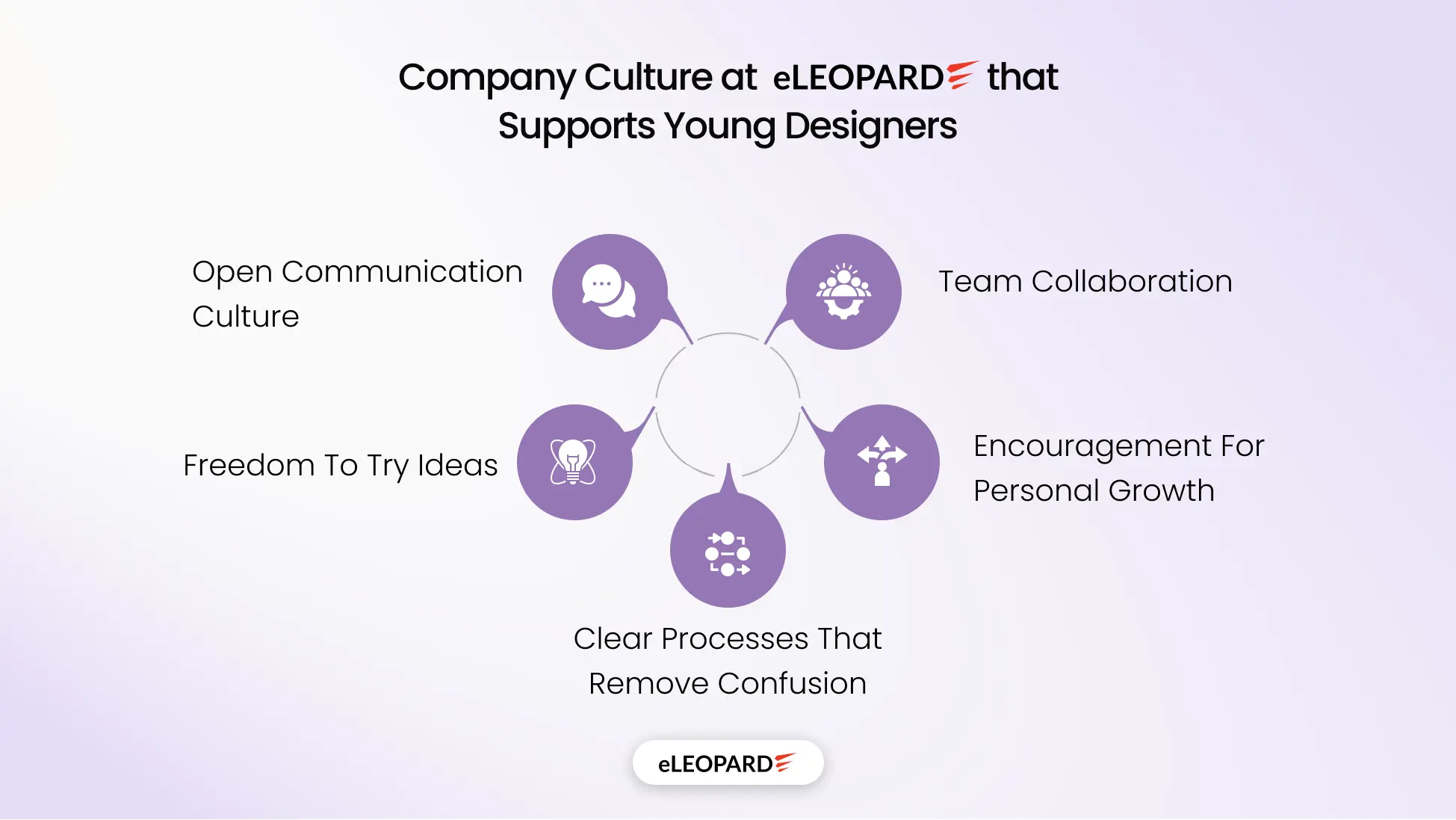
Company Culture at eLEOPARD That Supports Young Designers
1. Open communication culture
eLEOPARD encourages everyone, juniors and seniors, to share their thoughts freely. You can ask questions without hesitation and discuss ideas openly. This creates a comfortable space where learning becomes faster, and mistakes become opportunities instead of setbacks.
2. Freedom to try ideas
3. Team collaboration
Designers don’t work alone. eLEOPARD promotes teamwork where designers, developers, and product managers work together. You get to understand how each person contributes to the final product, making the overall design more practical and effective.
4. Clear processes that remove confusion
eLEOPARD follows organised workflows and systems, so you always know what to do next. There are clear steps for reviews, feedback, and handoffs. This reduces confusion, avoids rework, and helps projects move smoothly from design to development.
5. Encouragement for personal growth

Conclusion
Internship projects and real-world design projects both play an important role in shaping a designer. Internships provide the foundation, freedom to explore, learn, and make mistakes, while real projects teach responsibility, collaboration, and the impact of design on actual users and business goals. Together, they build both skill and confidence. What makes this journey smoother is the environment you learn in, and at eLEOPARD, the open communication, supportive mentorship, structured processes, and freedom to experiment create the ideal bridge between learning and real-world execution. This strong company culture helps young designers grow faster and transition seamlessly from practice to performance, making their professional journey meaningful and successful.
