For enterprise leaders, software is a capital investment. It is evaluated on capability, scalability, compliance, and total cost of ownership. But there is another variable that directly impacts ROI and enterprise value: user experience.
For years, enterprise platforms survived with clunky interfaces and complex workflows because switching costs were high and alternatives were limited. That era is over. In 2026 and beyond AI-augmented, and employee-centric operating model, poor UX is no longer a nuisance. It is a strategic risk.
Bad UX does not just slow down tasks. It compounds across thousands of employees, millions of transactions, and critical decisions. It erodes productivity, undermines transformation programs, and quietly reduces the return on every technology dollar invested.
The real danger? These costs rarely appear in a dashboard labeled “UX problem.” They surface as:
- Slower cycle times
- Lower system adoption
- Shadow IT proliferation
- Incomplete or low-quality data
- Employee disengagement
- Delayed strategic execution
From a CXO perspective, that translates into margin pressure, operational drag, and execution risk.
Understanding Poor UX in Enterprise Software
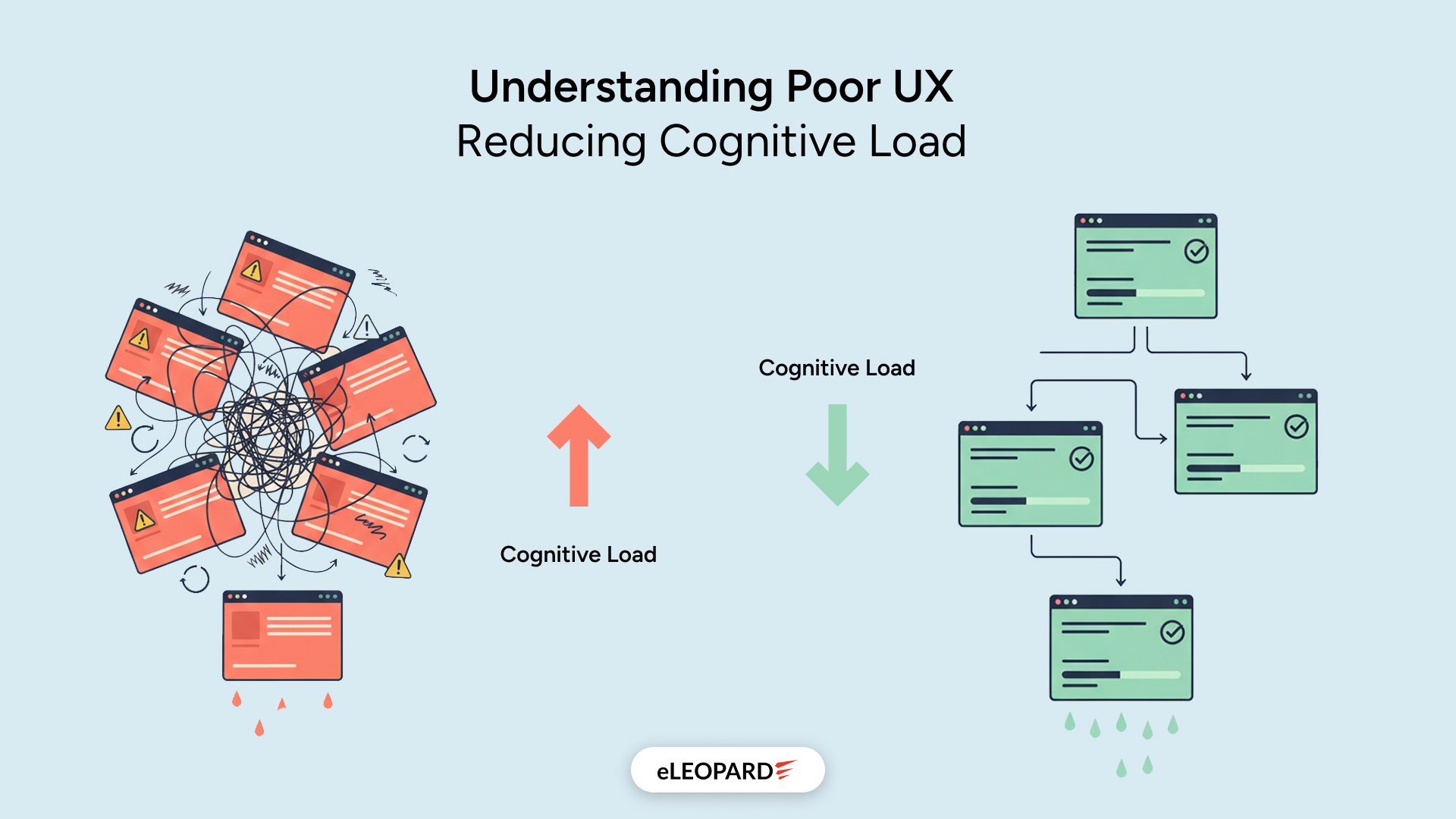
Poor UX in enterprise software occurs when systems fail to support how people actually think and work. It is not just about visual design but about the quality of experience across the entire workflow.
This experience breakdown typically occurs at three levels:
- Cognitive level (Decision Velocity Risk): Many enterprise workflows are designed around system constraints rather than user intent. The result:
- Process level: Tasks require unnecessary steps, repeated data entry, or manual workarounds because workflows were designed around systems, not users.
- Emotional level: Repeated friction leads to frustration, distrust in the software, and reduced motivation to use it effectively.
Why Does This Matter?
Enterprise software is meant to enable strategy. When UX fails, strategy execution slows.
In boardrooms, discussions often center on technology spend, AI enablement, automation, and digital maturity. Yet one overlooked variable determines whether these investments deliver value: whether people can and will use the tools effectively.
Bad UX silently reshapes performance. It:
- Reduces the realized ROI of technology investments
- Increases transformation fatigue
- Encourages shadow ecosystems that dilute governance
- Slows enterprise responsiveness
In short, it converts strategic assets into operational liabilities.
Common Characteristics of Bad Enterprise UX
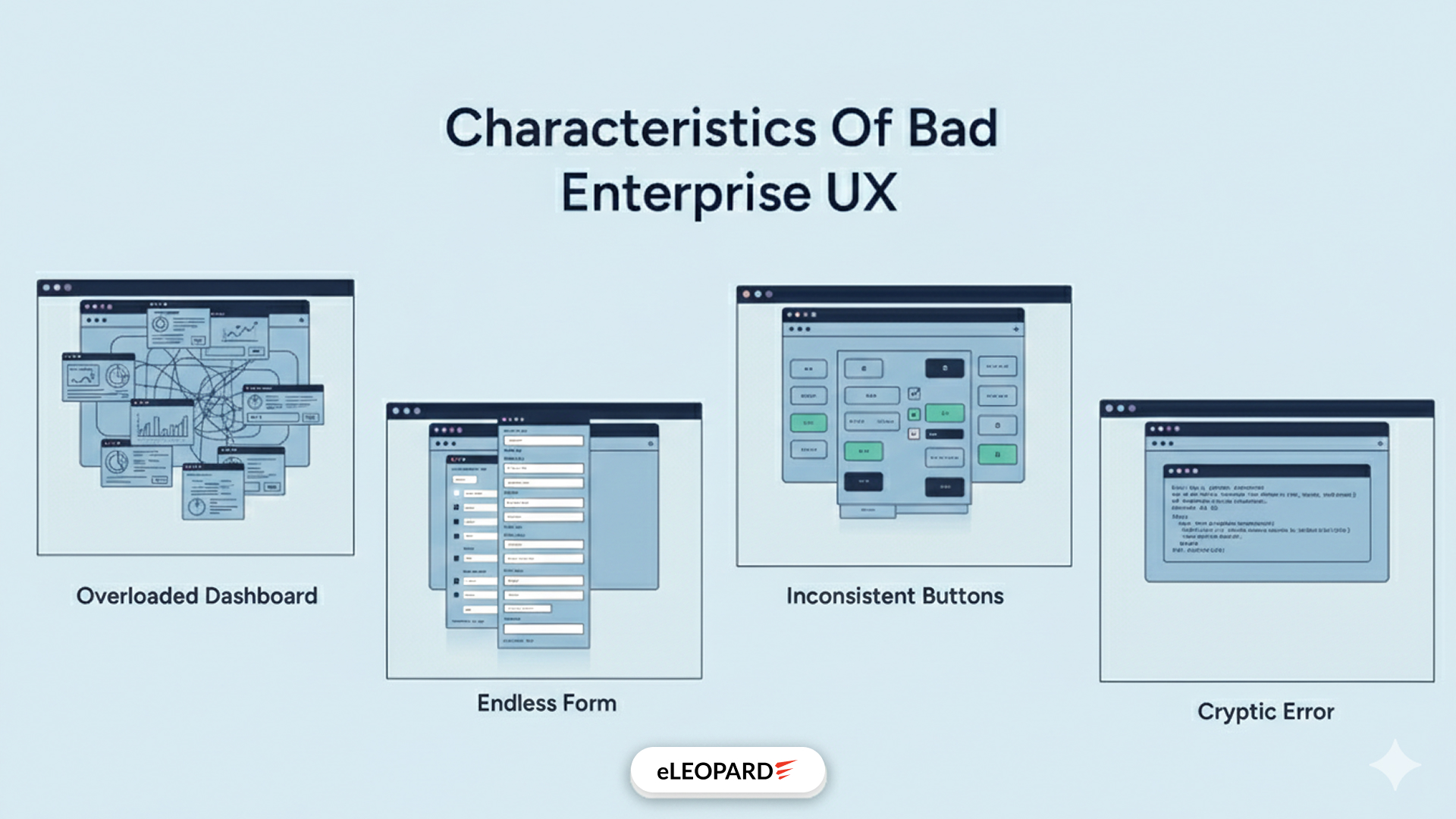
Bad enterprise UX follows predictable patterns that emerge from poor design decisions:
- Overloaded interfaces: When too many features are crammed into one screen, users struggle to find what matters most, leading to inefficiency and frustration.
- Workflow mismatch: Software that reflects internal structures rather than user tasks creates unnecessary steps and slows workflows.
- Steep learning curves: When systems require extensive training for basic tasks, it wastes time and lowers productivity, hindering adoption.
- Inconsistent behavior: Actions that vary across screens or functions force users to relearn processes, increasing confusion and errors.
- Unclear feedback: Lack of clear feedback when errors occur leaves users unsure of how to proceed, disrupting their work and causing frustration.
Each of these issues individually slows users down. Together, they significantly reduce system efficiency and trust.
Business Impact of Bad UX
| UX Problem | What Happens Operationally | Why It Matters to the Business |
|---|---|---|
Confusing navigation | Users take longer to complete tasks | Productivity loss scales across teams |
Poor usability | Users avoid advanced features | Software value remains unrealized |
High error rates | More rework and corrections | Increased operational and compliance risk |
Complex onboarding | Longer training cycles | Higher cost per employee |
Frustrating experience | Low engagement | Increased turnover and dissatisfaction |
Common Cause Of Bad UX
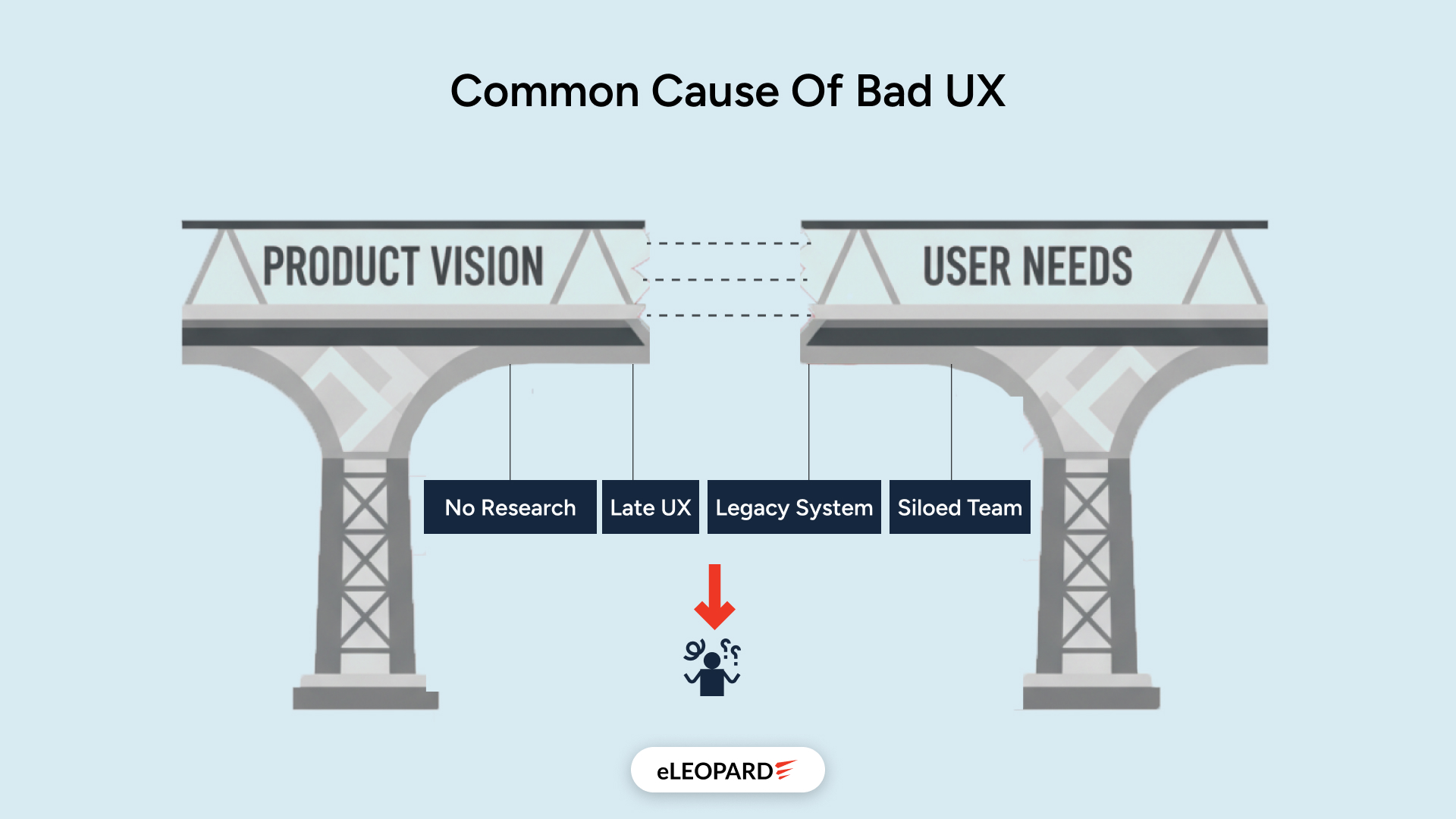
Bad UX is usually the result of systemic issues rather than individual mistakes:
- UX is added too late: Design decisions are constrained by existing technical choices.
- Lack of real user research: Decisions are based on assumptions instead of observed behavior.
- Legacy constraints: Old systems are extended rather than rethought.
- Siloed teams: Designers, developers, and business stakeholders work independently.
- Feature-driven thinking: Success is measured by what the system can do, not how well it works.
Without addressing these root causes, UX problems resurface in every release cycle.
How Organizations Prevent Bad UX and Turn Costs into ROI (Process Explanation)
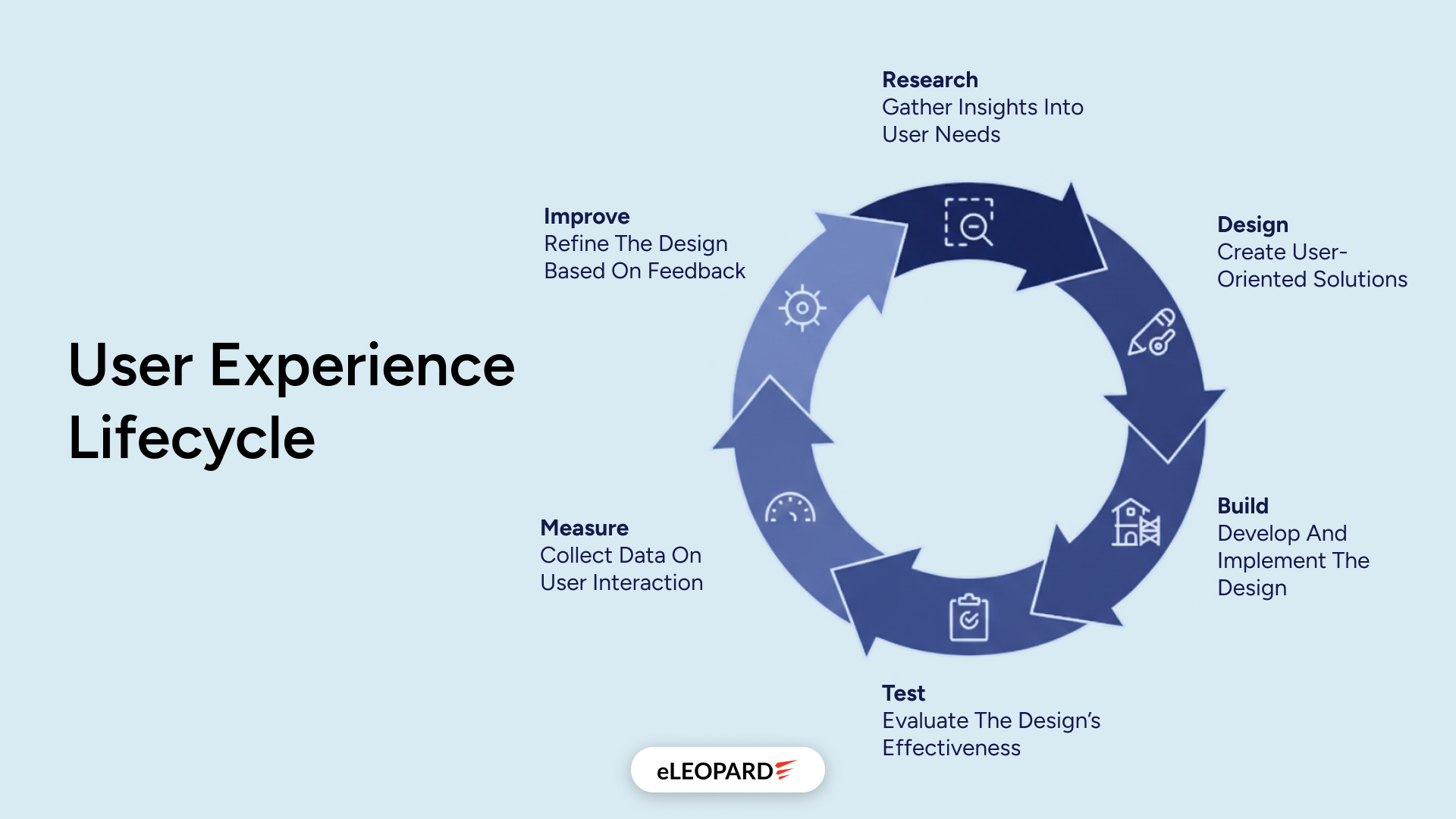
Step 1: User observation
Step 2: Workflow simplification
Step 3: Consistent design systems
Step 4: Cross-functional collaboration
Step 5: Measurement and iteration
UX improvements are evaluated using adoption, efficiency, and error metrics.
This approach ensures UX improvements translate into measurable business value.
The ROI of Preventing Bad UX
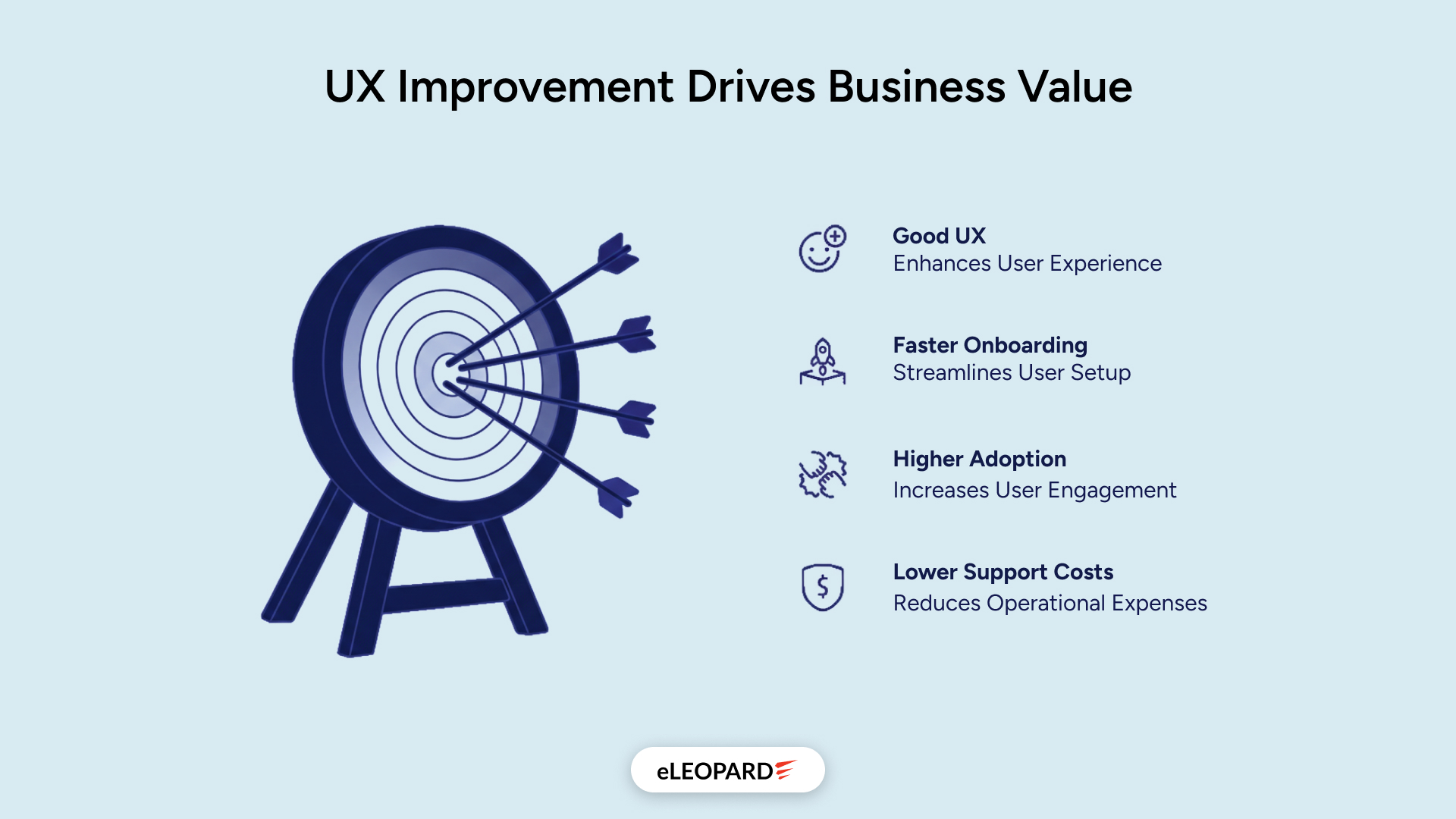
Investing in good UX for enterprise software is more than just a design choice—it’s a strategic move that pays off across multiple areas of the business. Here’s how improving UX can lead to big returns:
- Operational ROI: Faster workflows reduce time spent per task.
- Financial ROI: Lower training and support costs offset UX investment.
- Adoption ROI: Users engage more deeply with existing systems.
- Human ROI: Employees experience less frustration and higher satisfaction.
Unlike feature investment, UX ROI compounds over time as systems become easier to use and maintain.
How the eLEOPARD Team Addresses Bad UX
A Structured, Market-Aligned UX Transformation Methodology
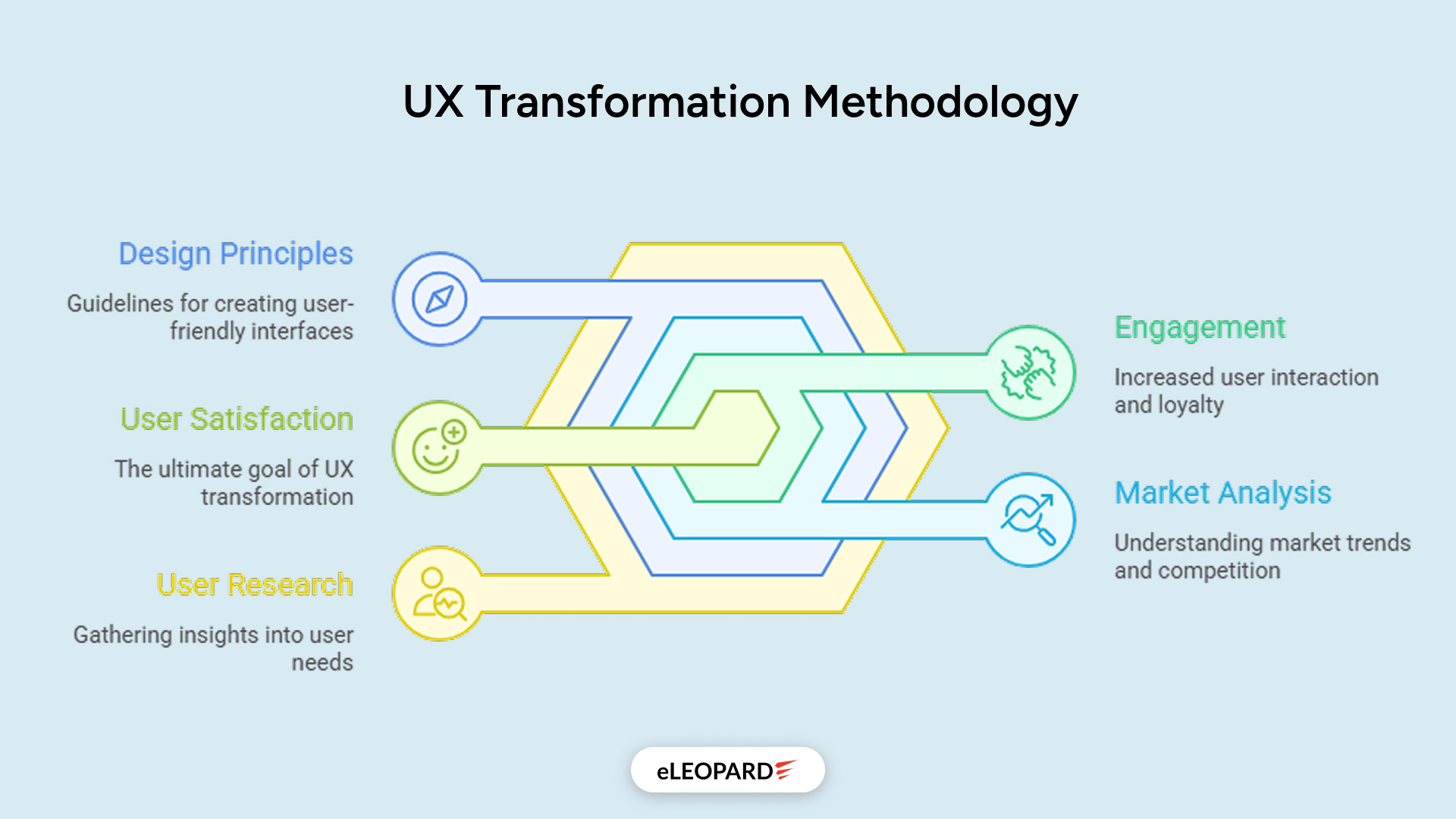
The eLEOPARD team approaches bad UX as a systemic business problem, not a surface-level design flaw. Rather than focusing only on screens or visuals, the team works across strategy, behavior, technology, and market expectations to create UX solutions that are both usable and scalable.
Their methodology is built to address the root causes of bad UX while ensuring alignment with current and future enterprise needs.
1. Deep User and Workflow Intelligence
eLEOPARD begins every UX engagement with a strong emphasis on understanding how work actually happens inside the organization.
This includes:
- Observing real users performing real tasks in production environments
- Mapping end-to-end workflows across departments and systems
- Identifying friction points, delays, manual workarounds, and error-prone steps
- Understanding decision-making patterns under time and compliance pressure
Rather than relying on assumptions or stakeholder opinions, eLEOPARD grounds UX decisions in behavioral evidence, ensuring that designs reflect reality, not theory.
2. Business-Driven UX Strategy
UX improvements are tied directly to business outcomes. The eLEOPARD team works with leadership to translate business objectives into experience goals.
Key activities include:
- Aligning UX initiatives with KPIs such as productivity, adoption, and error reduction
- Prioritizing UX improvements based on impact and feasibility
- Defining experience principles that guide design decisions at scale
- Balancing usability with security, compliance, and performance constraints
This strategic layer ensures UX is not treated as decoration, but as a lever for measurable business value.
3. Workflow-First Design Approach
Instead of starting with interface design, eLEOPARD focuses on simplifying workflows first.
This approach involves:
- Removing unnecessary steps before redesigning screens
- Reducing data entry duplication and cognitive load
- Streamlining approvals, handoffs, and exception handling
- Designing experiences that support speed, accuracy, and clarity
By fixing workflows before visuals, the team ensures that improved UX delivers real efficiency gains, not just better-looking screens.
4. Scalable Enterprise Design Systems
To prevent UX inconsistency and future regression, eLEOPARD develops enterprise-grade design systems tailored to complex products.
These systems include:
- Standardized UI components and interaction patterns
- Clear usage guidelines for designers and developers
- Accessibility and usability standards
- Governance models to maintain consistency across teams
This allows organizations to scale UX quality across products and releases while reducing design and development overhead.
5. Continuous Validation with Real Users
UX is treated as an ongoing process, not a one-time fix. eLEOPARD validates solutions continuously using real-world feedback.
Validation methods include:
- Usability testing with actual enterprise users.
- Task success and time-on-task measurement.
- Error rate and support ticket analysis.
- Feedback loops are integrated into release cycles.
This ensures that UX improvements remain relevant as systems, users, and business needs evolve.
6. Market and Trend Alignment
Enterprise UX does not exist in isolation. eLEOPARD actively aligns UX decisions with current market standards and user expectations.
This includes:
- Benchmarking against modern enterprise and SaaS platforms
- Incorporating best practices in accessibility, responsiveness, and performance
- Anticipating shifts in user behavior driven by AI, automation, and remote work
- Designing for future extensibility rather than short-term fixes
By aligning UX with market evolution, organizations avoid falling behind user expectations.
7. Measurement, Optimization, and ROI Tracking
Every UX initiative is evaluated using measurable outcomes. eLEOPARD helps organizations track:
- Adoption and feature utilization rates
- Reduction in training and support effort
- Improvements in task efficiency and accuracy
- User satisfaction and engagement trends
This data-driven approach allows leadership to see UX not as a cost, but as an investment with compounding returns.
8. Knowledge Transfer and UX Enablement
To ensure long-term success, eLEOPARD focuses on empowering internal teams.
This includes:
- UX playbooks and documentation
- Training for product, design, and engineering teams
- Governance models for ongoing UX quality
- Shared ownership of user experience across the organization
The goal is not dependency, but sustainable UX maturity.
Summary Insight
In Wrap
Bad UX is one of the most underestimated costs in enterprise software. While its impact is rarely immediate, it accumulates quietly through lost productivity, disengaged users, and underperforming systems.
Organizations that proactively invest in UX move beyond fixing interfaces, they improve how work gets done. In an enterprise landscape where efficiency and agility define success, good UX is no longer optional. It is a critical driver of long-term value.
Why UX Is Everyone’s Problem (and Opportunity)
Bad UX doesn’t usually break things in one big, obvious way. Instead, it chips away at people’s time, patience, and energy, one confusing screen, one extra step, one workaround at a time. When teams spend more effort figuring out how to use a system than actually getting work done, that’s not just annoying, it’s expensive.

Let’s Fix Bad UX Together
Bad UX doesn’t have to be something teams just “deal with.” If your software feels harder to use than it should, chances are there’s real value being left on the table. Those little frustrations add up, and fixing them can make everyday work faster, smoother, and a lot less stressful.
If this sounds familiar, we’d love to talk. Whether you’re dealing with low adoption, complex workflows, or systems that just don’t feel right, the eLEOPARD team is always up for a conversation. No pressure, no buzzwords, just a chance to look at what’s not working and figure out how to make it better. Connect with us and let’s turn UX from a pain point into something your teams actually enjoy using.
